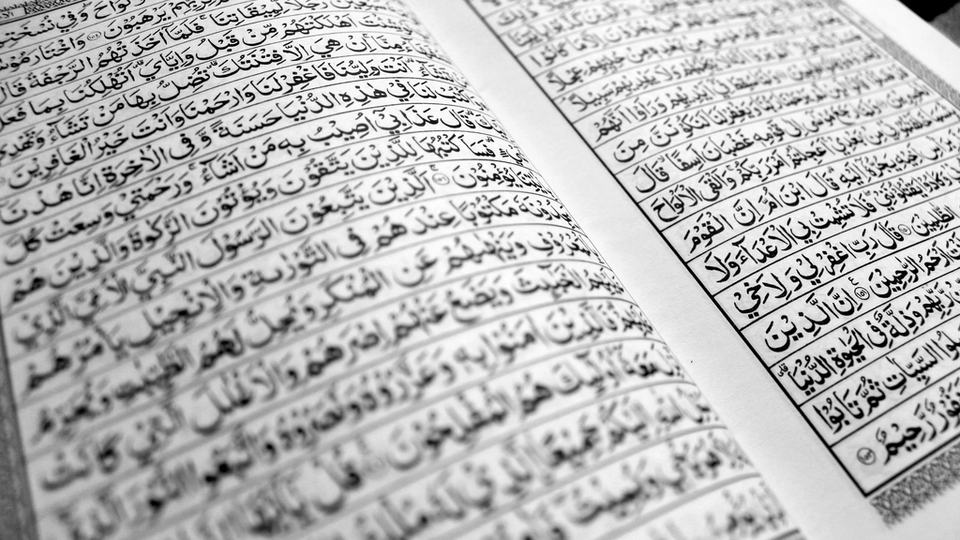
If you listen to Qurʾān recitations from around the world, you may notice small differences: a vowel lengthened here, a word pronounced slightly differently there. These are not mistakes. They are the qirāʾāt — authentic ways of reciting the Qurʾān, each transmitted from the Prophet ﷺ through unbroken chains of teachers.
Where the readings come from
In a well-known narration, ʿUmar ibn al-Khaṭṭāb heard Hishām ibn Ḥakīm reciting Sūrat al-Furqān differently from the way the Prophet ﷺ had taught ʿUmar. He brought him to the Prophet ﷺ, who listened to both and said each was revealed that way, adding that the Qurʾān was revealed in seven modes (aḥruf), “so recite whichever is easier for you” (Ṣaḥīḥ al-Bukhārī 4992).
That flexibility was a mercy to a community of many tribes and dialects. Over the following generations, master reciters preserved these modes with extraordinary precision. Scholars later recognised ten canonical readings, each named after a leading reciter and passed on through two principal transmitters.
The readings you are most likely to hear
- Ḥafṣ ʿan ʿĀṣim — the reading of most printed muṣḥafs today, widespread across the Middle East, South Asia and much of the world.
- Warsh ʿan Nāfiʿ — common in North and West Africa.
- Qālūn ʿan Nāfiʿ — heard in Libya and parts of Tunisia.
- Al-Dūrī ʿan Abī ʿAmr — found in parts of Sudan and East Africa.
Different readings, one message
The differences are in pronunciation and, occasionally, wording that complements rather than contradicts — like two facets of the same meaning. Every authentic reading is the Qurʾān, recited by the Prophet ﷺ and preserved by the ummah generation after generation. Far from undermining its preservation, the qirāʾāt are one of its most remarkable demonstrations.
Hear it for yourself
Many celebrated reciters, such as Shaykh ʿAbd al-Bāsiṭ ʿAbd al-Ṣamad, recorded in more than one reading. In the Bakiif Qurʾān reader you can switch between reciters and notice how each brings the same words to life.
Further reading
Can the Qur’an Be Recited in Different Ways? The Meaning and Wisdom of Qira’at — Yaqeen Institute.